
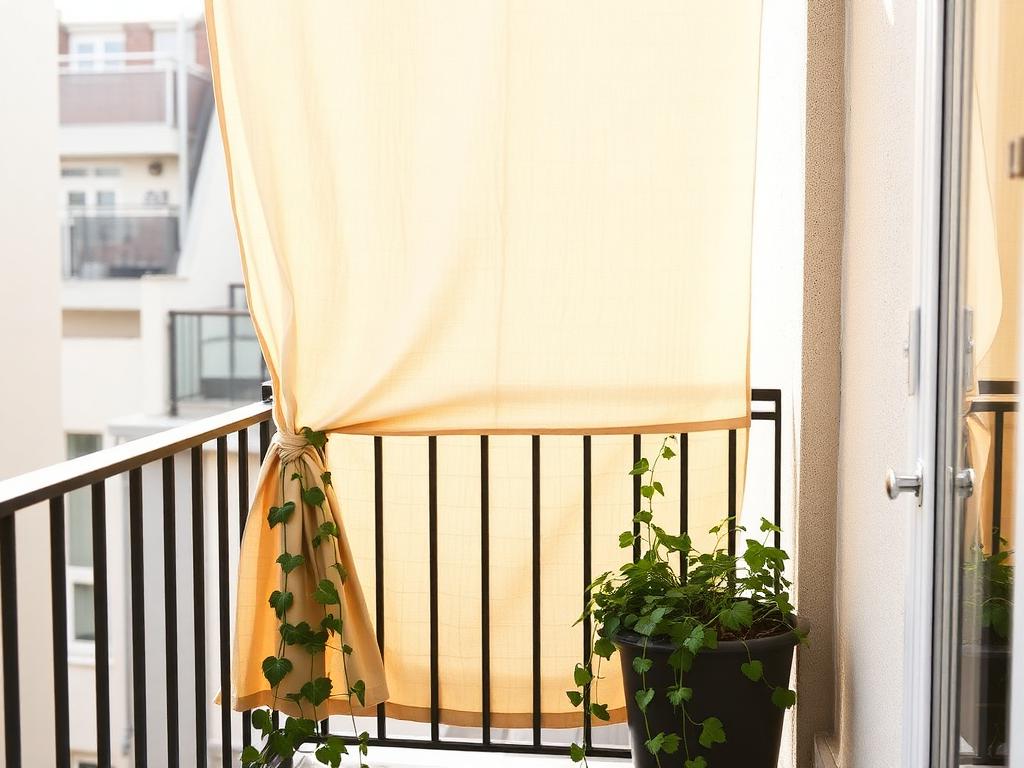
🌿 Quick ideas
- Identify which one sight line bothers you most.
- Use a no-drill mesh screen with cable ties.
- Group taller planters along the same edge.
- Position seating away from overlooked corners.
- Check your tenancy agreement before fitting anything semi-permanent.
Want the quickest fix?
For most UK renters, a tie-on balcony privacy screen along the railing is the simplest starting point. It needs no drilling, fits in an afternoon and gives consistent coverage along the most overlooked side.
If you're not sure where to start, see our roundup of the best balcony privacy screens UK — picked for no-drill fitting, UK wind and renter-friendly use.
Solve one sight line first
You rarely need privacy on every side. Pick the worst sight line — often a neighbour's window — and start there.
Privacy screen, plants or layout change?
There are three main routes to balcony privacy for renters, and most setups end up combining two of them.
- Balcony privacy screen — fastest fix, tie-on or clip-on, full coverage along a railing.
- Tall planters — soft, living screen, good for an overlooked corner, slower to grow in.
- Railing planters — break up sight lines at railing height without taking floor space.
- Outdoor curtains — flexible, decorative, but need a sturdy fixing point.
- Furniture placement — moving the seat inward by 30–40cm often does more than people expect.
- Bamboo or reed screening — natural look, ties to railings, weathers over a couple of UK winters.
- Temporary panels — freestanding screens you can move with you when the tenancy ends.
No-drill balcony privacy ideas for renters
If you can't drill — which is most rented UK balconies — you've still got a lot of options. The trick is to combine one main screen with one or two softer layers.
- Tie-on balcony privacy screens fixed with cable ties through railings.
- Freestanding tall planters as a soft second layer behind the screen.
- Movable benches or storage boxes to break a sight line without fixings.
- Tall potted plants — bamboo, grasses or evergreen shrubs in heavy pots.
- Clamp-on or non-permanent brackets for outdoor curtains or smaller panels.
- Always check tenancy rules before fitting anything that touches the outside of the railing.
No-drill screens
Cable-tied mesh screens are usually the safest renter option. Mesh handles wind better than solid panels.
Living screens
A row of taller planters can soften the line of sight without fully enclosing the balcony.
Anything fixed normally needs landlord permission. No-drill is usually the safer option.
If you want a single recommendation, start with a tie-on balcony privacy screen — see the best balcony privacy screens UK roundup for renter-friendly picks.
Mistakes to avoid
- Buying a fully solid screen for a windy balcony.
- Cable-tying screens too tightly to brittle railings.
- Forgetting that screens block your view out as well as in.
Frequently asked questions
How can I make a balcony private as a renter?
Cable-tied screens, tall planters and a thought-through layout cover most situations.
Are balcony privacy screens worth it?
Yes, especially if you can sit on the balcony for longer with one in place.
How can I make a rented balcony more private without drilling?
Combine a tie-on balcony privacy screen along the railing with one or two tall freestanding planters. Move your seat 30–40cm inward from the railing so you're sitting out of the main sight line. None of this needs drilling and all of it comes with you at the end of the tenancy.
Are balcony privacy screens allowed in rented flats?
Usually yes if they're tied or clipped to existing railings and not drilled in. Some UK leases restrict anything hanging on the outside of the balcony, so check your tenancy agreement and building rules before fitting.
What is the cheapest way to add balcony privacy?
A single tie-on mesh privacy screen on the most overlooked side is normally the cheapest meaningful upgrade. Add one tall plant or planter as a second layer and you'll get most of the benefit without spending much.
Related guides
Disclosure: Some links on this site may be affiliate links. As an Amazon Associate, we may earn from qualifying purchases.
Editor's note: Advice in this guide is general and UK-focused. Always check tenancy, building and safety guidance for your own situation.