
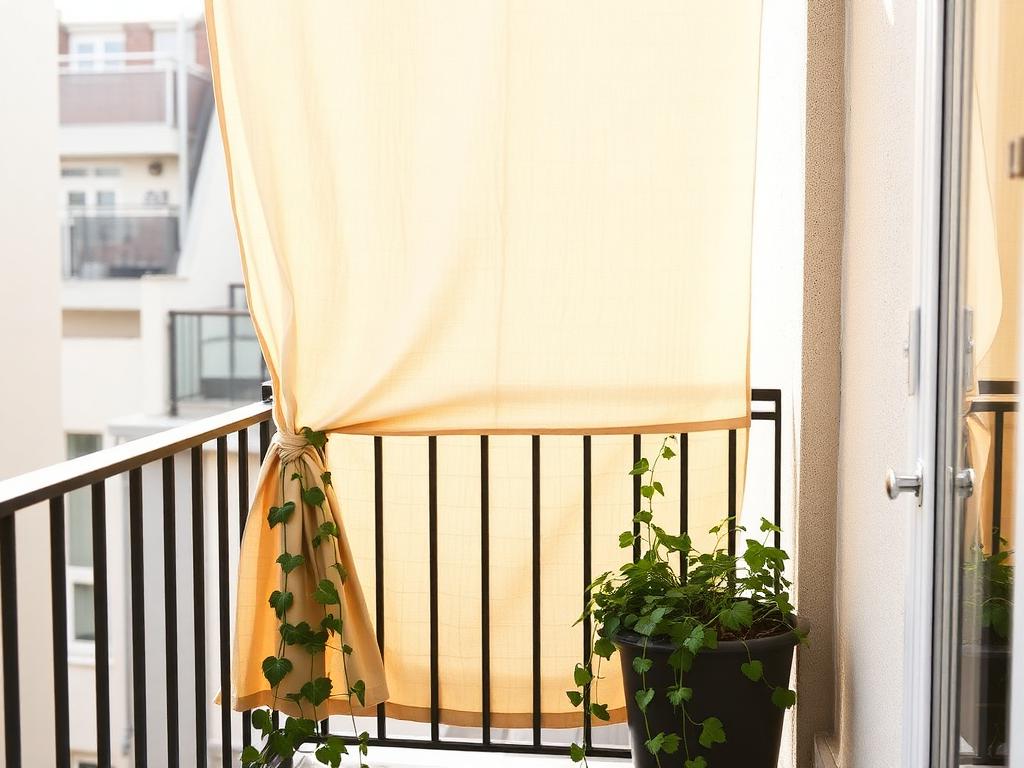
Quick answer: which garden privacy screen should you choose?
Freestanding privacy screens are the most flexible option where drilling or permanent fixing isn't suitable — rented gardens, paved patios or spots where you may want to move the screen later.
Mesh privacy screens work well along existing fences or railings. They're lightweight, easy to cable-tie in place and good for cutting sightlines along a whole boundary.
Bamboo screening gives a more natural appearance and blends with planting. It suits traditional small gardens and softens tired fence panels.
Artificial trellis or ivy screens provide decorative coverage without waiting for climbing plants to fill in. They're best treated as a visual feature rather than complete privacy.
Before buying, check wind exposure, fixing method, total height and width, and whether the screen will affect light to plants or seating. For balcony-specific advice see our best balcony privacy screens UK guide.
Freestanding garden privacy screens: when are they the best choice?
Free standing garden screens are the easiest upgrade for small patios and compact gardens where you don't want to touch the fence. They stand on their own feet or a weighted base, so nothing has to be drilled into a wall, fence post or paving slab.
They're a natural fit for rented homes, temporary layouts and situations where fences or walls can't be drilled. Many folding panel designs let you angle the screen around a bistro set, close it up when not needed, or move it to follow the sun or the neighbour's window.
The trade-off is stability. Anything tall on a small patio will act as a sail in wind, so suitable feet, ballast or careful positioning against a wall or planter matters as much as the panels themselves. Heavy raised planters placed at the base of a freestanding screen are a common way to anchor it without permanent fixings.
In smaller layouts, a single freestanding screen next to seating usually delivers more useful privacy than trying to wrap the whole boundary. See small patio ideas on a budget for more ways to make a compact patio feel private without over-building.
Freestanding screen, mesh screen, bamboo or artificial screening?
Freestanding privacy screen: movable, useful for patios and rented spaces, no permanent installation, but usually needs extra stability in wind — either a heavier base or a wall or planter behind it.
Mesh privacy screen: lightweight fabric roll, suitable for fences and railings, and usually attached with cable ties at close, even spacing. Best where the existing fence is sound.
Bamboo screening: natural appearance, useful for fences and boundaries, weathers to a softer silvery tone over time. Adds weight, so avoid fixing to a weak or rotting fence.
Artificial trellis or ivy: decorative and useful for visual coverage on small patios, balconies and courtyard walls. Should be secured carefully in exposed locations so panels don't lift in wind. For a similar look in a smaller footprint, our balcony privacy ideas for renters guide covers no-drill options.
What to check before buying a garden privacy screen
Total height and width vs the area you actually want to screen — measure both, and think about what needs to be hidden from your seating position, not the whole garden.
Level of coverage: solid, semi-open (like slatted screens or ivy panels) or purely decorative. Semi-open screens block sightlines without cutting all the light.
Wind exposure, especially on open patios and corner gardens. Long fabric rolls and tall freestanding panels add wind load.
Fixing method: freestanding feet, cable ties, brackets or drilled fixings. Match this to what your fence, wall or tenancy will actually allow.
Stability of freestanding screens — check the base or feet, and add ballast (planters, weights) if the spot is exposed.
Suitability for rented properties: prefer no-drill and reversible options. Our how to make a balcony private without drilling guide covers the same principle for balconies.
UV and weather resistance on artificial ivy and trellis panels — quality varies.
Whether the screen will block useful sunlight to plants, lawn or your own seating area.
Whether neighbours or shared boundaries are affected — for boundary fences, it's worth a quick check on ownership before adding significant weight.
Common mistakes with garden privacy screens
Choosing a screen that's too short to actually block the sightline you're worried about.
Failing to measure the available width, so panels overlap awkwardly or leave a gap.
Ignoring wind exposure and ending up with a screen that flexes, flaps or tips.
Buying a freestanding screen without checking stability — no ballast, lightweight feet on an exposed patio.
Permanently fixing something in a rented property that then has to come down at the end of the tenancy.
Blocking useful sunlight to seating or plants by going too tall or too solid.
Confusing decorative screening (artificial ivy, open trellis) with complete privacy — it softens views rather than fully hiding them.
Placing heavy screening on a weak or rotting fence panel that can't take the extra load.
For related layout mistakes, see small garden storage ideas — storage and screens compete for the same wall and corner space in a small garden.
Quick comparison
Outsunny 3-Panel Garden Privacy Screen
Neulriscn Privacy Screen Garden 2m x 15m
Suregreen Natural Bamboo Fence Screening
CHRISTOW Artificial Red Acer Trellis
SUNJULY Artificial Ivy Privacy Fence Screen
Our picks
Outsunny 3-Panel Garden Privacy Screen
Why it works. A freestanding 3-panel privacy screen is one of the most flexible garden privacy options for small UK spaces — you can angle it around a bistro set, soften a sightline from a neighbour's window, or move it when the layout changes. No drilling into the fence required.
What to check before buying. Overall height and panel width vs the seating area you want to screen, and how the base behaves on uneven paving.
Who it suits. Small patios, rented gardens and anyone who wants a movable garden privacy screen rather than a permanent fix.
Neulriscn Privacy Screen Garden 2m x 15m
Why it works. A long roll of fabric privacy screening is the quickest way to cover an entire small-garden fence run. It cuts wind and sightlines along the whole boundary without buying multiple short panels.
What to check before buying. Fence condition and post strength — long rolls add wind load, so the fence needs to be sound.
Who it suits. Owners with a continuous fence run who want consistent coverage along the boundary rather than panel-by-panel screening.
Suregreen Natural Bamboo Fence Screening
Why it works. Natural bamboo screening gives a softer, more organic look than fabric. It blends well with planting, weathers gracefully, and is one of the most popular garden privacy screen choices in the UK for traditional small gardens.
What to check before buying. Roll height vs your fence height, and whether your fence is strong enough to take the extra weight.
Who it suits. Garden owners who want a natural, planting-friendly look rather than a flat fabric panel.
CHRISTOW Artificial Red Acer Trellis
Why it works. A decorative trellis screen with artificial acer foliage doubles as a privacy panel and a small-garden feature. It works well next to seating where you want both screening and something nice to look at.
What to check before buying. Trellis dimensions vs the spot, and whether it needs a stand, wall fix or planter base.
Who it suits. Small patios and balconies where a single decorative privacy panel matters more than long fence coverage.
SUNJULY Artificial Ivy Privacy Fence Screen
Why it works. Artificial ivy panels give a fast green-wall effect without waiting for climbing plants to fill in. They're a popular choice for outdoor privacy screens on small UK patios where you want immediate visual coverage.
What to check before buying. Panel size, leaf density and how the panels join — sparse panels look thin once up.
Who it suits. Anyone who wants a greenery-led look on a fence, wall or balcony without the wait, including renters with permission to tie panels on.
Check before buying
- Measure the area you want to screen before buying — width and height both matter in small gardens.
- Check screen height carefully — taller isn't always better when light is tight.
- Consider wind exposure, especially on exposed patios and corner gardens.
- Avoid blocking too much light — a partial screen near the seating area often beats a full wall.
- Check whether the screen is freestanding, tie-on, roll-out or expandable.
- Check whether fixing is needed and whether your fence, wall or railing can take it.
- Think about privacy from your seating areas first, not the whole garden boundary.
- Use freestanding privacy screens where permanent fixing isn't suitable, including rented gardens.
- Choose natural bamboo or willow for a softer, more organic look that blends with planting.
- Choose artificial greenery panels for fast visual coverage without waiting for plants to grow.
- Avoid overloading weak or old fences with heavy rolls of screening.
- Check fence, wall or railing compatibility before ordering tie-on or roll-out screens.
Common mistakes
- Buying a privacy screen without measuring the area first.
- Choosing a screen so tall it blocks light to plants or seating.
- Fixing heavy bamboo rolls to a weak or rotting fence.
- Forgetting wind exposure on an open patio and ending up with a sail.
- Trying to screen the whole boundary instead of focusing on the seating area.
- Drilling into a rented fence or wall without permission.
Final recommendation
If you're not sure where to start, a freestanding garden privacy screen like the Outsunny 3-panel is the most flexible option for small UK gardens — you can place it next to seating, move it for events and avoid fixing into the fence. For permanent fence coverage, roll-out bamboo or artificial greenery panels usually give the best balance of look and effort. Pair whatever you pick with the rest of a comfortable small-garden setup — a bistro set for a small patio and a small garden storage box usually do more for day-to-day use than extra screening.
Frequently asked questions
What is the best garden privacy screen for a small garden?
For most small UK gardens, a freestanding privacy screen positioned next to the seating area is the most flexible choice. It screens the spot you actually use, doesn't need fixing into a fence and can be repositioned when the layout changes. Where you have a continuous fence run, mesh or bamboo screening covers more length for less money.
Are freestanding garden privacy screens suitable for windy gardens?
Free standing garden screens can work in windy gardens, but they need to be treated carefully. Place them against a wall or use heavy raised planters at the base as ballast, avoid the tallest options on exposed corners, and fold or move panels away in storms if the design allows.
Can I use a garden privacy screen in a rented property?
Yes. Freestanding privacy screens are usually the safest choice for rented gardens because they don't require drilling. Cable-tied mesh or bamboo screening on an existing fence is also reversible in most cases, but always check your tenancy agreement first. Our balcony privacy ideas for renters guide covers the same principle for flats.
Is bamboo screening better than artificial screening?
Neither is strictly better — they solve different problems. Bamboo screening gives a natural, planting-friendly look and suits traditional gardens, but it weathers over time. Artificial ivy or trellis panels give an instant green effect and don't fade with the seasons, but they're clearly artificial up close. Choose based on the look you want and how exposed the spot is.
How tall should a garden privacy screen be?
For seated privacy, around 1.6–1.8m above the seating level is usually enough. Standing privacy needs more. In small gardens, taller screens block more light, so aim for the lowest height that actually blocks the sightline you're worried about rather than defaulting to the tallest option.
Do garden privacy screens require drilling?
Not always. Freestanding privacy screens stand on their own base and need no drilling. Roll-out mesh and bamboo screening usually attach with cable ties to an existing fence. Only fixed trellis panels and some heavier boundary screens typically need drilled fixings.
Can privacy screening be attached to an existing fence?
Yes — mesh, fabric and bamboo screening are all designed to attach to an existing fence, usually with cable ties at close, even spacing. Make sure the fence is sound: long rolls add wind load, and a weak or rotting panel won't take the extra weight.
How can I add privacy without blocking too much light?
Focus screening on the specific sightline you want to block — usually one seating area or one overlooked corner — rather than the whole boundary. Semi-open options like slatted freestanding panels, open trellis with light climbers, or lower screens paired with taller patio planting keep light coming through while still cutting the view. See small patio ideas on a budget for more layout ideas.
Related guides
Editor's note: Small Garden Guide UK does not personally test every product. Picks are based on publicly available product information, suitability for small UK outdoor spaces and editorial judgment.